
Rejuran Healer vs Exosome Therapy: Which Is Right for You?
Quick answer: Rejuran Healer injects salmon-derived polynucleotides (PN) into the skin to repair, thicken and calm it over three sessions. Exosome therapy applies an exosome serum through microneedling or laser channels to support recovery, calm redness and refine texture, usually over 3–5 sessions. At Dernia Clinic Myeongdong, Rejuran starts from ₩259,000 (2cc) and exosome therapy from ₩190,000 (full face with microneedling).
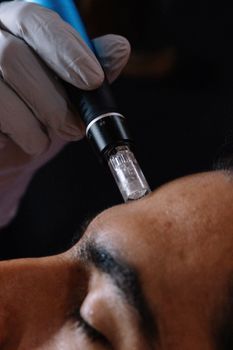
- Core difference: Rejuran is an injected booster; exosomes are a serum delivered with microneedling or laser
- Rejuran Healer from: ₩259,000 (2cc, full face)
- Exosome therapy from: ₩190,000 (full face with microneedling)
- Downtime: Small bumps 1–3 days (Rejuran); redness 1–2 days (exosome)
- Sessions: Usually 3 (Rejuran); a series of 3–5 (exosome)
- Evidence: Longer track record for PN; exosome research is still emerging
Rejuran Healer vs exosome therapy at a glance
Both are popular in Korea for skin repair, calmer redness and better texture, and both are often discussed as regenerative treatments. They are delivered very differently. Rejuran Healer is injected into the dermis, while exosome therapy applies a serum to the skin straight after microneedling or laser so it can reach deeper through tiny channels.
| Feature | Rejuran Healer | Exosome Therapy |
|---|---|---|
| Technology | Polynucleotides (PN) from salmon DNA (Pharma Research) | Exosome serum applied with microneedling or laser |
| How it works / target depth | Injected in small amounts across the dermis to support repair and elasticity | Microchannels let the serum penetrate beyond the surface to support recovery |
| Best for | Thin or sensitive skin, fine lines, pores, overall resilience | Post-acne marks, redness, rough texture, recovery after procedures |
| Comfort | Many small injections; known to sting; numbing used | Microneedling with numbing cream; serum itself is soothing |
| Downtime | Small bumps for 1–3 days | Redness for 1–2 days |
| Sessions | Usually 3, about 3–4 weeks apart | A series of 3–5, a few weeks apart |
| Results appear | Within weeks; builds with each session | Gradual improvement across the series |
| Results last | Builds over 3 sessions; maintenance every 6 months | Best maintained with periodic sessions |
| Price from at Dernia | ₩259,000 (2cc, full face) | ₩190,000 (full face with microneedling) |
How Rejuran Healer works
Rejuran Healer, made by Pharma Research in Korea, contains purified polynucleotides from salmon DNA. Injected across the face, PN supports the skin's natural repair processes, improves hydration and helps calm inflammation. Over a series, skin tends to look thicker, more elastic and less reactive. Polynucleotide-based boosters have been used in Korean dermatology for many years, so doctors have a good sense of what to expect.
How exosome therapy works
Exosomes are tiny vesicles that cells release to carry signals, including proteins and other molecules, to neighboring cells. Exosome serums for skin are produced from cultured cells or plant sources and are designed to support repair and calm inflammation. At Dernia, the serum is applied immediately after microneedling or laser so it can pass through the fresh microchannels. Research on exosomes in dermatology is promising but still emerging, and products vary in source and concentration, so we describe expected benefits conservatively.
Choose Rejuran Healer if…
- You want an injected booster with a long track record in Korea
- Your skin is thin, fragile or easily irritated
- Fine lines and enlarged pores are part of your concern
- You want results that build visibly over three sessions
Choose exosome therapy if…
- You have post-acne marks, redness or rough texture
- You prefer microneedling with a serum to multiple injections
- You are having laser or microneedling and want to support recovery
- You want a lower per-session cost and can complete a series
Can you combine them?
Yes. They work in complementary ways, and many plans use both: Rejuran injected for skin strength, and exosome serum applied with microneedling or after laser to support healing. Your doctor may alternate them across visits about two to four weeks apart. Exosome therapy is also part of our Acne Reset Package(from ₩249,000).
Cost comparison
At Dernia Clinic Myeongdong, Rejuran Healer starts from ₩259,000 for 2cc and exosome therapy from ₩190,000 for the full face with microneedling. A three-session Rejuran course starts from ₩777,000; an exosome series of three to five sessions starts from ₩570,000. See current plans on the Rejuran Healer price page and the exosome therapy price page. Prices are in Korean won (KRW), exclude 10% VAT, and are confirmed at your consultation.
How our doctors decide
Your doctor examines your skin's thickness, sensitivity, redness and texture, and asks what other treatments you are planning. Thin or reactive skin with fine lines points to Rejuran. Marks, redness and texture, especially alongside laser or microneedling, point to exosome therapy. If you are already planning laser or RF microneedling during your stay, adding exosome serum to that session is an efficient way to support recovery without an extra appointment.
Rejuran is not injected during pregnancy or breastfeeding, over active infection, or without review if you take blood thinners or have a fish allergy. Microneedling is postponed during active acne infection or cold sores and after recent isotretinoin use. See typical outcomes on the exosome therapy results page, browse more comparisons, or book a consultation and a licensed doctor will recommend the repair plan that suits your skin.
Not sure which treatment is right for you?
Tell us your concerns and your travel dates. A doctor examines your skin in person, explains your options in English, and confirms the plan and price before anything is done.
FAQ
Frequently asked questions
Straight answers from our medical team. Still unsure? Ask a doctor or browse all patient questions .
Are exosomes better than Rejuran?
They are different tools. Rejuran is an injected polynucleotide booster with a long track record in Korea, while exosome serum is applied with microneedling or laser to support recovery. Exosome research is promising but still developing, so your doctor will explain realistic expectations.
Are exosomes injected?
At Dernia, exosome serum is applied to the skin immediately after microneedling or laser, so it can pass through the fresh microchannels. It is not injected as a standalone product.
Which is better for post-acne redness?
Exosome therapy with microneedling is often chosen for post-acne marks and texture, while Rejuran helps calm and strengthen reactive skin. Persistent red marks may also benefit from a vascular laser.
How much downtime should I expect?
Rejuran leaves small bumps for one to three days. Exosome therapy with microneedling usually causes redness for one to two days. Both fit easily into a trip.
Can I have both in one visit?
Sometimes. Your doctor may inject Rejuran and apply exosome serum with microneedling in one session, or alternate them. The plan depends on your skin's sensitivity and goals.
Keep exploring
Related treatments, prices and guides
Treatments compared
- Rejuran Healer — injected PN repair booster
- Exosome therapy — serum with microneedling or laser
- Excel V laser — vascular laser for red marks
Price and reviews
- Rejuran Healer price in Seoul — 2cc and course pricing
- Exosome therapy price in Seoul — session pricing
- Exosome therapy review — our honest assessment
- Rejuran Healer review — pros, cons and value
Concerns and guides
- Redness and rosacea — calming treatment options
- Rough skin texture — boosters, lasers and more
- Skin boosters explained — PN, PDLLA, HA and exosomes
More comparisons
- Rejuran Healer vs Profhilo — PN vs HA
- Chanel Injection vs Rejuran Healer — glow vs repair
Plan your visit to Dernia Clinic Myeongdong
English consultations, clear prices in Korean won and treatment plans built around your time in Seoul. Tell us your dates and we will suggest a schedule that fits.
Individual results vary. Suitability, dosage and final price are confirmed by a licensed doctor at your consultation. Prices are in Korean won (KRW) and exclude 10% VAT. Medical disclaimer