
Dermal Filler in Myeongdong, Seoul
Quick answer: Dermal filler uses hyaluronic acid (HA) gel to restore volume and refine contours in the cheeks, chin, nose, temples and smile lines. At Dernia Clinic Myeongdong it starts from ₩150,000 per 1cc of Korean HA (KRW, VAT excluded). Results are immediate, mild swelling settles in 1–3 days, and filler lasts about 6–18 months depending on the area and product.
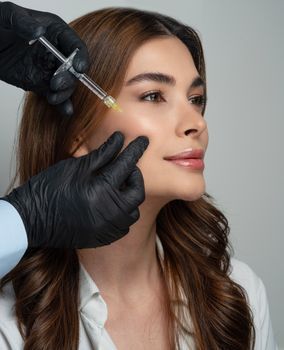
- Price from: ₩150,000 (1cc, Korean HA)
- Session time: 20–30 minutes, plus numbing
- Numbing: Topical cream; most fillers also contain lidocaine
- Downtime: Mild swelling for 1–3 days; bruising possible
- Results: Immediate; settled at about 2 weeks
- Longevity: About 6–18 months depending on area and product
- Reversible: Yes — HA can be dissolved with hyaluronidase
What is dermal filler?
Dermal filler is a gel injected under the skin to restore lost volume, soften folds and refine contours. At Dernia it means hyaluronic acid (HA) filler. HA is a sugar molecule your skin makes naturally; in filler it is cross-linked so it lasts months rather than days. HA filler is popular because results are immediate, adjustable and reversible, since an enzyme called hyaluronidase can dissolve it if needed. At Dernia Clinic Myeongdong, dermal filler starts from ₩150,000 per 1cc of Korean HA and is injected by licensed medical doctors.
How dermal filler works
Filler supports tissue from beneath. Firmer gels placed deep, near the bone, add structure to the chin, nose or cheekbones; softer gels placed more superficially smooth folds and hollows. HA also binds water, so treated areas look fresher. Korean HA brands such as YVOIRE (LG Chem) and Neuramis (Medytox) are widely used, and imported options include Juvéderm (Allergan) and Restylane (Galderma). Our guide to hyaluronic acid filler brands used in Korea compares them.
Who dermal filler suits
- Flat or hollow cheeks and temples from age-related volume loss
- Deep smile lines (nasolabial folds) or marionette lines
- A short or recessed chin, or a soft jawline profile
- A low nasal bridge you would like to raise without surgery
Filler does not tighten loose skin or stop expression lines forming; muscle-driven lines respond better to toxin, and sagging to lifting. Your doctor will tell you honestly when filler is not the right tool.
Common areas and typical volumes
| Area | Typical amount | Lasts about |
|---|---|---|
| Chin | 1–2cc | 12–18 months |
| Nose (bridge) | 0.5–1cc | 12–18 months |
| Cheeks | 1–2cc | 12–18 months |
| Temples | 1–2cc for both sides | 9–18 months |
| Nasolabial folds | 1–2cc for both sides | 6–12 months |
Korean clinics price filler per cc, and one syringe is usually 1cc; see shots, lines and cc explained. Korean and imported HA options are listed on the dermal filler price page. Prices are in Korean won (KRW), exclude 10% VAT, and are confirmed at your consultation.
Your session at Dernia, step by step
- Consultation in English — your doctor assesses your face at rest and in motion and agrees areas and volume with you.
- Photos and marking — reference photos are taken and key points marked.
- Numbing — topical cream; most fillers also contain lidocaine.
- Injection — with a fine needle or blunt cannula, slowly and in small amounts, checking symmetry as you go.
- Review — you check the result in the mirror before you leave.
Downtime and aftercare
Expect mild swelling and tenderness for one to three days, and possibly a bruise. Avoid pressing or massaging the area unless told to, and skip alcohol, saunas and hard exercise for 24–48 hours. Sleep on your back the first night. Makeup can usually be worn the next day. We also answer can I drink alcohol after filler in detail.
Results timeline
Results are visible immediately but can look slightly fuller while swelling settles. The final shape shows at about two weeks, which is when a small touch-up is considered. HA breaks down slowly, lasting about 6–18 months depending on area and product. Many people top up a little each year rather than waiting for the filler to fade completely. See the dermal filler results guide.
Dermal filler vs alternatives
Filler adds volume while Botox relaxes muscles; see Botox vs dermal filler. For gradual, collagen-based volume instead of instant gel, read dermal filler vs Sculptra. Lips and under-eyes need softer products and their own technique: see lip filler and under-eye filler.
Planning dermal filler around a trip to Seoul
Have filler early in your stay, ideally at least three to five days before you fly, so your doctor can review the result. Flying afterward is generally fine. Avoid dental work and facial massage for about two weeks. Bring a note of any filler you have had before, with brands and dates if you know them. Book a consultation and your doctor will confirm a plan, or browse other injectable treatments.
Safety and who should avoid it
The most important rare risk is vascular occlusion: filler entering or pressing on a blood vessel, which can damage skin and, very rarely, affect vision. Risk is higher on the nose, between the brows, at the temples and in the smile lines, and after previous nose surgery. Your doctor reduces it with anatomy-based technique, cannulas where appropriate, slow small-volume injection and hyaluronidase on hand. Contact the clinic immediately if you notice worsening pain, pale or mottled skin, or any change in vision. Filler is not recommended during pregnancy or breastfeeding, or with an active infection or cold sore, a bleeding disorder or uncontrolled autoimmune disease. Tell your doctor about blood thinners and any previous filler or implants.
Not sure which treatment is right for you?
Tell us your concerns and your travel dates. A doctor examines your skin in person, explains your options in English, and confirms the plan and price before anything is done.
FAQ
Frequently asked questions
Straight answers from our medical team. Still unsure? Ask a doctor or browse all patient questions .
Does dermal filler hurt?
Most people feel pressure and mild stinging rather than pain. Numbing cream and the lidocaine inside most fillers make it comfortable, and the injections take only a few minutes per area.
How many cc do I need?
It depends on the area and your goal. A chin often needs 1–2cc, a nasal bridge 0.5–1cc, and the cheeks 1–2cc. Your doctor recommends an amount at consultation and can build gradually over two visits.
Can filler be dissolved?
Yes. HA filler can be dissolved with an enzyme called hyaluronidase if you are unhappy with the shape or if a complication occurs. This is one reason HA is the standard choice for facial filler.
Will filler look natural?
The Korean approach favors subtle, balanced changes rather than obvious volume. Your doctor places small amounts in the right layers and reviews the result with you, so it looks like a refreshed version of you.
Can I get Botox and filler on the same day?
Yes, many people do. Your doctor plans the order and areas so the two work together; see Can I get Botox and filler on the same day?
Is nose filler safe?
Nose filler can raise a low bridge without surgery, but the nose has a delicate blood supply, so it needs careful technique and small volumes. If you have had nose surgery, your doctor may advise against it.
Keep exploring
Related treatments, prices and guides
Related treatments
- Lip filler — soft HA for shape and definition
- Under-eye filler — careful HA for tear-trough hollows
- Sculptra — gradual, collagen-stimulating volume
Price, results and FAQs
Concerns and areas
Compare and guides
Plan your visit to Dernia Clinic Myeongdong
English consultations, clear prices in Korean won and treatment plans built around your time in Seoul. Tell us your dates and we will suggest a schedule that fits.
Individual results vary. Suitability, dosage and final price are confirmed by a licensed doctor at your consultation. Prices are in Korean won (KRW) and exclude 10% VAT. Medical disclaimer