
Thread Lift Review: Is It Worth It?
Quick answer: A thread lift is worth it if you have moderate sagging in the cheeks or jawline and want a visible lift without surgery, and you can allow three to seven days of swelling or bruising. At Dernia Clinic Myeongdong it starts from ₩690,000 per area (KRW, excluding VAT). Results commonly last 12 to 18 months.
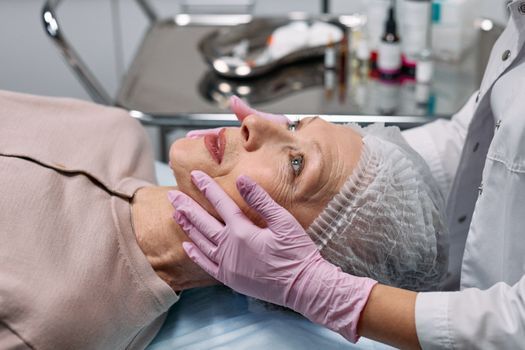
- Our verdict: The most visible non-surgical lift we offer, but a minor procedure with real downtime
- Best for: Moderate cheek descent, jowls and deepening folds in the 40s and 50s
- Not ideal for: Very thin or very heavy skin, short trips, bleeding disorders
- Comfort: Local anesthetic makes it tolerable; tightness and soreness for days after
- Downtime: Three to seven days of swelling or bruising
- Value: Higher price per area, balanced by a visible change lasting 12–18 months
- Price from: ₩690,000 (per area)
Our take on the thread lift
This is our medical team's honest assessment of the PDO thread lift. It is an editorial review written by our doctors, not a collection of patient reviews, and it is meant to help you weigh threads against the device-based lifting at Dernia Clinic Myeongdong. Our other assessments are on the expert reviews hub.
A thread lift places dissolvable polydioxanone (PDO) threads under the skin through fine needles or cannulas. Barbed or cogged threads hold and reposition sagging tissue, while smooth threads stimulate collagen as they dissolve. Unlike energy devices, threads give a visible lift on the day. In our view that makes them the strongest non-surgical lift we offer, but they are a minor procedure, not a facial, and they carry downtime and risks that energy treatments do not.
Pros
- Visible lift on the day. Repositioning is mechanical, so you see change immediately, which improves as swelling settles.
- Collagen stimulation. As threads dissolve, the body builds new collagen around them.
- No incisions. Treatment uses local anesthesia and needle entry points rather than surgery.
- Lasting effect. Results commonly last 12 to 18 months.
- Targets specific areas. It works well for the midface, jowls and jawline when devices are not enough.
Cons
- Real downtime. Swelling and bruising usually last three to seven days.
- Restrictions afterward. For a few weeks you should avoid wide mouth opening, dental work, facial massage and strenuous exercise.
- Possible complications. Dimpling, asymmetry, visible or palpable threads, thread extrusion and infection can occur; most are manageable but need follow-up.
- Variable longevity. Heavy or very loose skin can lose lift sooner.
- Technique-dependent. Results rely heavily on the doctor's planning and placement.
Who a thread lift is best for
Our doctors see the best results in people from their late 30s to 50s with moderate cheek descent, early jowls or deepening smile lines caused by sagging, who want more lift than energy devices give but do not want surgery. You need reasonable skin thickness and enough time in Seoul for a follow-up check before you fly.
Who should consider something else
- Early laxity or no downtime allowed: ultrasound lifting avoids needles and swelling. See Thread lift vs Ulthera Prime.
- Sagging from volume loss: a collagen stimulator such as Sculptra or dermal filler may restore support better.
- Very heavy, loose skin: a surgical facelift consultation may be more appropriate; we will tell you honestly.
- A very short trip: energy devices fit better if you cannot stay for a check-up.
- Medical reasons: avoid threads during pregnancy, with active skin infection, bleeding disorders or blood thinners your doctor cannot safely pause, or a tendency to keloid scarring.
Comfort and what it feels like
After numbing and local anesthetic at the entry points, most people feel pressure and pulling rather than sharp pain. The procedure takes about 30 to 60 minutes. Afterward the face often feels tight and sore, especially when chewing, smiling widely or yawning, for several days. Sleeping on your back for the first week helps, and over-the-counter pain relief approved by your doctor is usually enough.
Value for money
Thread lifts at Dernia start from ₩690,000 per area; the final price depends on the number and type of threads, as explained on the thread lift price page. Prices are in Korean won (KRW), exclude 10% VAT, and are confirmed at your consultation. The cost is higher than most device treatments per session, but because the change is visible and commonly lasts over a year, the value is fair for the right candidate.
Our verdict
A thread lift is worth it for moderate sagging when you want visible lift without surgery and can plan around a week of recovery. It is not worth it for early laxity, very heavy skin or tight schedules. Read the thread lift results timeline to understand recovery and longevity, then book a consultation and your doctor will plan thread type and placement, or recommend a better option.
Not sure which treatment is right for you?
Tell us your concerns and your travel dates. A doctor examines your skin in person, explains your options in English, and confirms the plan and price before anything is done.
FAQ
Frequently asked questions
Straight answers from our medical team. Still unsure? Ask a doctor or browse all patient questions .
Is a thread lift worth it?
It is worth it for moderate sagging when energy devices are not enough and surgery is not wanted. You need to accept several days of swelling and a few weeks of restrictions. For early laxity, device-based lifting is usually the better choice.
How long does a thread lift last?
Results commonly last 12 to 18 months. PDO threads dissolve over months, and the collagen they stimulate helps maintain support afterward.
What are the risks of a thread lift?
Common effects are swelling, bruising and tightness. Less common issues include dimpling, asymmetry, visible threads, extrusion or infection, which your doctor manages at follow-up. Choosing an experienced doctor and following aftercare reduces risk.
Can I fly after a thread lift?
Flying is usually fine after a few days, but plan your treatment early in your trip so your doctor can check you before you leave. Avoid pressing on the face during travel and sleep on your back.
Thread lift or Ulthera: which should I choose?
Threads give a more immediate, visible lift with downtime; Ulthera gives a gradual lift with almost no recovery. Your doctor recommends one or both depending on the degree of sagging.
Keep exploring
Related treatments, prices and guides
Related treatments
- Thread lift treatment guide — how the procedure works
- Ulthera Prime — no-downtime ultrasound lift
- Sculptra — collagen support for volume loss
Price and results
- Thread lift price in Seoul — per-area pricing
- Thread lift results — recovery and longevity
Concerns
- Sagging skin — all lifting options
- Marionette lines — lines from the mouth corners
- Cheek treatments — lift and volume options
Guides
- Normal side effects vs when to contact us — recovery checklist
- A 7-day Seoul treatment schedule — room for recovery
- Who should avoid or delay lifting — safety first
Plan your visit to Dernia Clinic Myeongdong
English consultations, clear prices in Korean won and treatment plans built around your time in Seoul. Tell us your dates and we will suggest a schedule that fits.
Individual results vary. Suitability, dosage and final price are confirmed by a licensed doctor at your consultation. Prices are in Korean won (KRW) and exclude 10% VAT. Medical disclaimer