
Mole and Skin Tag Removal in Myeongdong, Seoul
Quick answer: Mole and skin tag removal uses a precise CO2 laser to remove small benign moles, skin tags and seborrheic keratoses in minutes. At Dernia Clinic Myeongdong it starts from ₩15,000 per lesion (KRW, VAT excluded). A doctor checks every spot first, and suspicious moles are referred for biopsy rather than lasered. Healing takes about 5–10 days under a small patch.
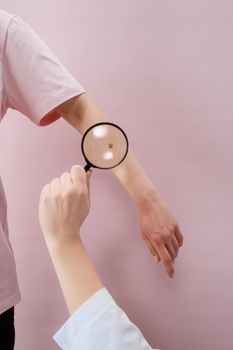
- Price from: ₩15,000 (per lesion)
- Session time: 10–30 minutes, depending on the number of spots
- Numbing: Cream or a tiny local injection
- Downtime: Healing patch for 5–10 days
- Results: Usually permanent
- Doctor check: Every lesion is examined; suspicious moles are referred for biopsy
- Best for: Small benign moles, skin tags and seborrheic keratoses
What is mole and skin tag removal?
Mole and skin tag removal at Dernia uses a precise CO2 laser to remove small benign skin growths: flat or raised moles, skin tags and seborrheic keratoses, the rough, waxy spots that often appear with age. The laser removes the growth layer by layer with very little bleeding, leaving a small, shallow wound that heals in about a week. At Dernia Clinic Myeongdong, removal starts from ₩15,000 per lesion and is performed by licensed medical doctors.
A doctor checks every spot first
Lasering destroys the tissue, so a removed mole cannot be sent to a laboratory afterward. That is why your doctor examines each spot, usually with a dermatoscope, before treatment. Moles with warning signs, such as asymmetry, an irregular border, several colors, a diameter over about 6mm, recent change, bleeding or itching, are not lasered. Instead, you are referred for a biopsy or surgical excision so the tissue can be checked under a microscope. If you have a personal or family history of skin cancer, mention it at your consultation. The doctor's check is part of every mole removal visit at Dernia, not an optional extra.
How CO2 laser removal works
CO2 laser energy is absorbed by water in the skin, vaporizing tissue precisely while sealing small blood vessels. Skin tags and seborrheic keratoses sit on the surface and come away easily, while moles with deeper cells need careful layer-by-layer removal. Thicker growths are removed gradually so the doctor can see when the base has been reached. Larger or deeper moles may be better removed by surgical excision with stitches, which your doctor will explain.
Who it suits
- Small benign moles and skin tags on the face, neck and body
- Seborrheic keratoses and other raised age spots
- Skin tags that catch on necklaces, collars or straps
- Several small lesions you would like removed in one visit
Lesion types
| Lesion | Typical approach | Healing |
|---|---|---|
| Skin tag | Removed at the base | About 5–7 days |
| Small flat or raised mole | Layer-by-layer removal | About 7–10 days |
| Seborrheic keratosis | Shaved down with the laser | About 7 days |
| Suspicious mole | Not lasered; referred for biopsy | Not applicable |
Price depends on the size and number of lesions; see the mole removal price page. Prices are in Korean won (KRW), exclude 10% VAT, and are confirmed at your consultation.
Your session at Dernia, step by step
- Consultation in English — your doctor examines each spot and confirms which are safe to laser.
- Marking — lesions to treat are marked, and you confirm them in the mirror.
- Numbing — cream, or a tiny local injection for larger moles.
- Removal — each lesion takes seconds to a few minutes.
- Dressing — a hydrocolloid patch covers each wound.
Downtime and aftercare
Each treated spot becomes a small, shallow wound. Keep it covered with the hydrocolloid patches provided for about five to ten days until new skin forms, and avoid picking, saunas and swimming until healed. The new skin is pink at first and fades over weeks to a few months. Use sunscreen on the area for at least three months to prevent darkening. Read normal side effects vs when to contact the clinic.
Results
Removal is usually permanent. Occasionally a few mole cells remain deeper in the skin and some pigment returns, more often with deeper moles; a touch-up can be done after healing. Larger lesions can leave a small flat or slightly depressed mark, so your doctor balances complete removal against the smallest possible scar.
Laser removal vs alternatives
Surgical excision with stitches suits larger or deeper moles and is required when a lesion needs laboratory testing. For flat brown spots that are pigment rather than growths, pico toning is more suitable. The same CO2 technology is used for resurfacing in CO2 fractional laser.
Planning mole removal around a trip to Seoul
Removal takes only minutes, and you can go sightseeing straight after with small patches in place. Have it early in your trip so the doctor can check healing if needed, and pack spare patches. If you have many spots, your doctor may treat the most visible ones first. Avoid swimming, saunas and strong sun while healing. Book a consultation and your doctor will check every spot first.
Safety and who should avoid it
Non-urgent removal is postponed during pregnancy and with infection in the area. Tell your doctor if you form keloid scars, take blood thinners, or have diabetes or slow wound healing. Any mole that is new, changing, bleeding or itching should be assessed medically rather than removed cosmetically. Browse our other laser and skin treatments.
Not sure which treatment is right for you?
Tell us your concerns and your travel dates. A doctor examines your skin in person, explains your options in English, and confirms the plan and price before anything is done.
FAQ
Frequently asked questions
Straight answers from our medical team. Still unsure? Ask a doctor or browse all patient questions .
Will my mole come back?
Most removed moles do not return. Occasionally a few deeper cells remain and some pigment reappears, more often with deeper moles, and this can be treated again once the skin has healed.
Will mole removal leave a scar?
Small, shallow lesions usually heal with a faint pink mark that fades over weeks to months. Larger or deeper moles can leave a small flat or slightly depressed mark. Patches and sun protection help the skin heal well.
Do you check moles for cancer?
Your doctor examines every lesion before treatment. Any mole with warning signs is not lasered but referred for a biopsy, because laser removal leaves no tissue to test.
How many moles can I remove in one visit?
Several small lesions can usually be treated in one session. If there are many, especially on the face, your doctor may suggest spreading them over two visits for easier healing.
Can I wear makeup after mole removal?
Not on the wounds until they have healed, usually after about a week. You can wear makeup elsewhere on the face and cover the patches lightly.
Does mole removal hurt?
With numbing cream or a tiny local injection, most people feel only brief warmth or a pinch. The removal itself takes seconds per lesion.
Keep exploring
Related treatments, prices and guides
Related treatments
- CO2 fractional laser — the same technology used for resurfacing
- Pico toning — for flat brown pigment rather than growths
- IPL photofacial — fades flat sun spots
Price, concerns and areas
Guides
Plan your visit to Dernia Clinic Myeongdong
English consultations, clear prices in Korean won and treatment plans built around your time in Seoul. Tell us your dates and we will suggest a schedule that fits.
Individual results vary. Suitability, dosage and final price are confirmed by a licensed doctor at your consultation. Prices are in Korean won (KRW) and exclude 10% VAT. Medical disclaimer