
IPL Photofacial in Myeongdong, Seoul
Quick answer: An IPL photofacial uses filtered flashes of broad-spectrum light to fade sun spots, freckles and diffuse redness across the face in one treatment. At Dernia Clinic Myeongdong it starts from ₩89,000 for the full face (KRW, VAT excluded). Treated spots darken and flake off over 5–7 days, and most people need about 3 sessions, 3–4 weeks apart.
- Price from: ₩89,000 (full face)
- Session time: About 20 minutes
- Technology: Intense pulsed light (broad-spectrum light, not a laser)
- Downtime: Spots darken and flake for 5–7 days
- Sessions: Best as 3, about 3–4 weeks apart
- Best for: Sun spots, freckles and diffuse redness
- Not ideal for: Melasma, a fresh tan or darker skin tones
What is an IPL photofacial?
An IPL (intense pulsed light) photofacial uses flashes of broad-spectrum light, filtered to the wavelengths that pigment and blood vessels absorb, to treat sun spots, freckles and diffuse redness across the whole face in one pass. Technically IPL is not a laser: it delivers a range of wavelengths at once rather than a single one, which is why it can address brown and red concerns in the same session. At Dernia Clinic Myeongdong, an IPL photofacial starts from ₩89,000 for the full face and is performed by licensed medical doctors.
How IPL works
The light is absorbed by melanin in pigmented spots and by hemoglobin in small surface vessels. Heated pigment rises toward the surface, where spots darken into fine, coffee-ground-like specks that flake off within about a week. Targeted vessels shrink and are gradually cleared, so background redness fades. Filters, pulse settings and cooling let the doctor tailor each session to your skin type and concern. Many people also notice a subtle overall brightening and slightly smoother texture, often called photorejuvenation.
Who IPL suits
- Sun spots, age spots and freckles
- Diffuse redness, flushing and mild rosacea
- Sun-damaged, uneven skin on the face, neck, chest and hands
- Lighter to medium skin tones without a current tan
IPL is generally not the first choice for melasma, which can darken with heat-based treatments; low-energy toning is usually preferred. It is also less suitable for darker skin tones. Your doctor checks your pigment type first, and our guide to pigmentation types explains the differences.
Areas and sessions
| Area | Typical course | Notes |
|---|---|---|
| Full face | 3 sessions, 3–4 weeks apart | The most common plan |
| Décolletage | 3 sessions | Sun spots and redness on the chest |
| Hands | 2–3 sessions | Age spots on the backs of the hands |
See the IPL photofacial price page for current options. Prices are in Korean won (KRW), exclude 10% VAT, and are confirmed at your consultation.
Your session at Dernia, step by step
- Consultation in English — your doctor examines your spots and redness and confirms IPL suits your skin type.
- Cleansing and gel — a cool gel layer is applied; numbing is not usually needed.
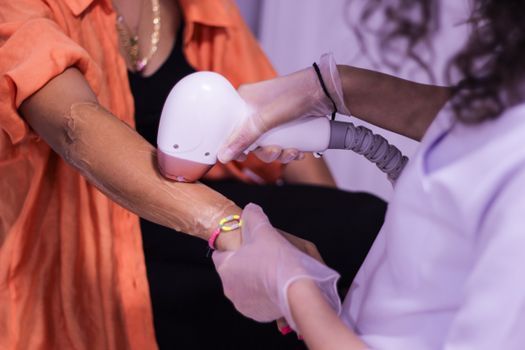
- Treatment — with eye protection on, the light head is placed on the skin and flashes are delivered across the face. Each flash feels like a warm snap.
- Soothing — the gel is removed and a calming mask applied, then sunscreen.
The light treatment itself takes about 20 minutes, and the whole visit around 45 minutes.
Downtime and aftercare
Your skin may look pink for a few hours, and treatments aimed at redness can leave mild swelling over the cheeks for a day. Treated spots usually darken within a day and flake off over five to seven days; let them shed on their own rather than picking. Makeup can cover them from the next day. Use gentle skincare and SPF 50 daily, avoid direct sun, and skip retinoids, scrubs, saunas and very hot showers for a few days.
Results timeline
Spots look lighter once the darkened specks flake off at about one week, and redness calms gradually over two to four weeks. Most people see the best result after three sessions. Results last as long as you protect your skin, since new sun exposure creates new spots. See the IPL photofacial results guide and our IPL photofacial review.
IPL vs alternatives
For melasma or sensitive pigment, pico toning is usually the safer choice; read pico toning vs IPL photofacial. For distinct visible vessels and stubborn redness, Excel V laser is more targeted; see Excel V vs IPL photofacial.
Planning IPL around a trip to Seoul
Book IPL early in your stay so the darkened spots can flake off before photos or your flight. You can fly the next day. If you are staying for three weeks or more, your doctor may be able to fit two sessions into your trip. A fresh tan raises the risk of burns and pigment changes, so have IPL before a beach holiday rather than after. The Pigment Clear Package combines IPL with pico toning and LDM for mixed pigment. Book a consultation and your doctor will confirm your plan.
Safety and who should avoid it
IPL is postponed during pregnancy, with a recent tan or sunburn, an active infection or cold sores, and after recent isotretinoin. It is not suitable if you take photosensitizing medicines or have a light-triggered skin condition. Darker skin tones carry a higher risk of burns and pigment changes, so your doctor may recommend a different treatment. Uncommon side effects include blistering, temporary darkening and light patches, which careful settings help prevent. See all our laser and skin treatments.
Not sure which treatment is right for you?
Tell us your concerns and your travel dates. A doctor examines your skin in person, explains your options in English, and confirms the plan and price before anything is done.
FAQ
Frequently asked questions
Straight answers from our medical team. Still unsure? Ask a doctor or browse all patient questions .
Is IPL the same as laser?
No. A laser uses a single wavelength, while IPL delivers a filtered range of wavelengths. That lets IPL treat brown spots and redness together, while lasers are more targeted to one concern.
Does IPL hurt?
Each flash feels like a warm snap against the skin. Cooling gel makes it comfortable for most people, and numbing cream is rarely needed.
Why do my spots look darker after IPL?
Darkening is a normal sign that the pigment has absorbed the light. The specks usually flake off within five to seven days, leaving lighter skin underneath.
Can IPL treat melasma?
IPL is not usually recommended for melasma because heat can make it worse. Low-energy pico or laser toning is the safer option, and your doctor will check which type of pigment you have.
Can I have IPL with a tan?
It is safer to wait until a tan has faded, because tanned skin absorbs more light and is more likely to burn. See Can I get laser treatment with a tan?
How many IPL sessions do I need?
Most people need about three sessions three to four weeks apart. Light freckling may improve after one or two, while redness often needs the full course.
Keep exploring
Related treatments, prices and guides
Related treatments
- Pico toning — gentle pigment treatment, suitable for melasma
- Excel V laser — targeted treatment for vessels and redness
- Laser toning — low-cost, no-downtime brightening
Price, results and reviews
- IPL photofacial price in Seoul
- IPL photofacial results timeline
- IPL photofacial review: is it worth it?
Concerns and areas
Compare and packages
- Pico toning vs IPL photofacial
- Excel V laser vs IPL photofacial
- Pigment Clear Package — pico toning, IPL and LDM
Plan your visit to Dernia Clinic Myeongdong
English consultations, clear prices in Korean won and treatment plans built around your time in Seoul. Tell us your dates and we will suggest a schedule that fits.
Individual results vary. Suitability, dosage and final price are confirmed by a licensed doctor at your consultation. Prices are in Korean won (KRW) and exclude 10% VAT. Medical disclaimer