
Sun Spot and Age Spot Treatment in Seoul
Quick answer: Sun spots, also called age spots or solar lentigines, are flat brown marks caused by years of UV exposure. At Dernia Clinic Myeongdong, they are usually treated with an IPL photofacial from ₩89,000, typically over about three sessions, or with gentle pico toning from ₩69,000 when melasma is also present. A doctor checks every spot first to make sure it is harmless.
- What they are: Flat brown spots on sun-exposed skin (solar lentigines)
- Main cause: Cumulative UV exposure over years
- Main options: IPL photofacial, pico toning
- Price from: ₩69,000 (pico toning, 1 session, full face)
- Downtime: Spots darken and flake for 5–7 days after IPL
- Sessions: Often around 3 IPL sessions; toning as a series
What causes sun spots and age spots?
Sun spots are flat, well-defined brown marks that appear on skin that has seen the most sun: the face, the backs of the hands, the forearms, the shoulders and the chest. Doctors call them solar lentigines. They form when years of UV exposure make pigment cells in one area produce extra melanin. They are not caused by age itself, but they become more common from your 30s and 40s as sun damage builds up. Fair skin, outdoor sports, tanning and past sunburns all increase the number of spots. Spots on the face often appear alongside fine lines and rough texture from the same sun damage.
How sun spots are assessed
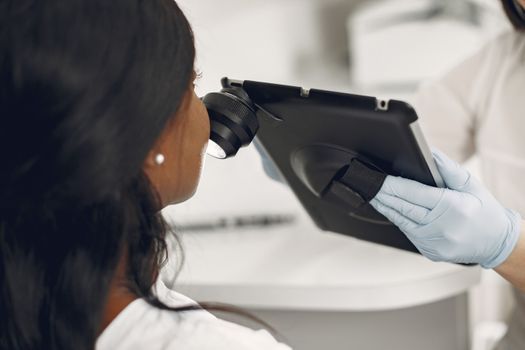
At Dernia Clinic Myeongdong, your doctor examines each spot before any treatment, often with a dermatoscope, a lighted magnifier. This matters because some skin cancers, including a slow-growing type of melanoma on sun-damaged skin, can look like an ordinary sun spot at first. Your doctor also separates sun spots from look-alikes:
- Melasma: blurry, symmetrical patches that need gentle toning, not strong light; see melasma
- Freckles: small spots that fade in winter; see freckles
- Seborrheic keratoses: raised, waxy spots that are removed rather than lightened
Your doctor also asks about any recent tan, which changes which treatment is safe. Our guide to pigmentation types explains these differences in more detail.
Treatment options for sun spots
IPL Photofacial
An IPL photofacial uses filtered intense pulsed light to target pigment and redness across the face in one pass. Treated spots darken and then flake off over 5–7 days. Your doctor chooses it when you have many sun spots, often with some redness, and your skin is not tanned. Around three sessions a few weeks apart usually give the best result. IPL also reduces diffuse redness and small visible vessels, so many people notice a clearer complexion overall.
Pico Toning
Pico toning uses a low-energy picosecond laser to break up pigment gradually with little downtime. Your doctor chooses it when sun spots sit alongside melasma, when your skin is darker or tanned, or when you cannot have visible flaking. Because there is little flaking, it suits busy schedules, and most people need several sessions spaced a few weeks apart.
Comparing your options
| Treatment | Best when | Downtime | From price |
|---|---|---|---|
| IPL Photofacial | Many spots on untanned skin | Spots darken and flake for 5–7 days | ₩89,000 (full face) |
| Pico Toning | Spots with melasma or darker skin | None to mild redness | ₩69,000 (1 session, full face) |
Prices are in Korean won (KRW), exclude 10% VAT, and are confirmed at your consultation. You can compare every treatment on our price list.
Combination plans
Many people start with IPL to clear most spots, then use pico toning to even out the remaining tone. Our Pigment Clear package combines pico toning, IPL and LDM soothing. Raised spots such as seborrheic keratoses are better removed with a CO2 laser through mole and skin tag removal. Compare the two light-based options in pico toning vs IPL. If sun damage has also left rough texture, see rough skin texture.
At-home care and prevention
- Use broad-spectrum SPF 50 daily, including on the backs of your hands.
- Reapply sunscreen outdoors and wear a hat and sunglasses.
- Use vitamin C or niacinamide serums to support an even tone.
- Expect new spots without sun protection, because treatment does not stop future damage.
- Check your skin monthly and note any spot that changes.
Planning treatment during a trip to Seoul
After IPL, spots darken and flake for about a week. That is easy to cover with makeup but worth planning around photos. Use SPF 50 and keep treated areas covered while the spots flake. Avoid tanning before and after; read can I get laser treatment with a tan. Pico toning has little downtime. Book a consultation so your doctor can check your spots and plan sessions.
When a spot needs medical attention
Use the ABCDE rule: asymmetry, an irregular border, uneven color, a diameter larger than a pencil eraser, or a spot that is evolving in size, shape or color. Also watch for spots that bleed, itch or look different from the others. Rough, scaly patches that do not heal may be actinic keratoses, which are precancerous and need medical treatment. Suspicious spots are never lasered. Your doctor will refer you for a biopsy so the tissue can be examined.
Not sure which treatment is right for you?
Tell us your concerns and your travel dates. A doctor examines your skin in person, explains your options in English, and confirms the plan and price before anything is done.
FAQ
Frequently asked questions
Straight answers from our medical team. Still unsure? Ask a doctor or browse all patient questions .
Are sun spots dangerous?
Ordinary sun spots are harmless, but they show that your skin has had significant sun exposure. Some skin cancers can look similar at first, which is why a doctor checks every spot before treatment.
Will sun spots come back after treatment?
Treated spots usually fade well, but new ones can appear with more sun exposure. Daily sunscreen is the best way to keep results.
How many IPL sessions do I need for sun spots?
Many people see a clear improvement after one session, and around three sessions a few weeks apart give the best overall result.
Can sun spots on my hands and chest be treated?
Yes. IPL is often used on the backs of the hands and the chest. See our hand treatments and décolletage treatments.
Do fading creams work on sun spots?
Brightening creams can help a little and support results, but well-defined sun spots usually need light or laser treatment to fade noticeably.
Keep exploring
Related treatments, prices and guides
Related treatments
- IPL photofacial — fades many spots at once
- Pico toning — gentle pigment laser
- Mole and skin tag removal — for raised spots
Prices, results and reviews
- IPL photofacial price — cost per session
- IPL photofacial results — what happens week by week
- IPL photofacial review — our medical team’s assessment
Related concerns and areas
- Melasma — a different, chronic pigment condition
- Freckles — seasonal genetic spots
- Hand treatments — sun spots on the hands
Packages and guides
- Pigment Clear package — IPL, pico toning and LDM
- Aftercare after laser — day-by-day guidance
Plan your visit to Dernia Clinic Myeongdong
English consultations, clear prices in Korean won and treatment plans built around your time in Seoul. Tell us your dates and we will suggest a schedule that fits.
Individual results vary. Suitability, dosage and final price are confirmed by a licensed doctor at your consultation. Prices are in Korean won (KRW) and exclude 10% VAT. Medical disclaimer